Linking to an Amazon product
〰️
Linking to an Amazon product 〰️
Refined Beauty Expertise
Professional-Grade Beauty Products Nourished by Nature, Crafted Locally
A lot of people are moving away from harsh chemicals, synthetic fillers, and mystery ingredients—and we understand why. 🌿
Your hair and skin deserve real, clean nourishment from ingredients you can recognize.
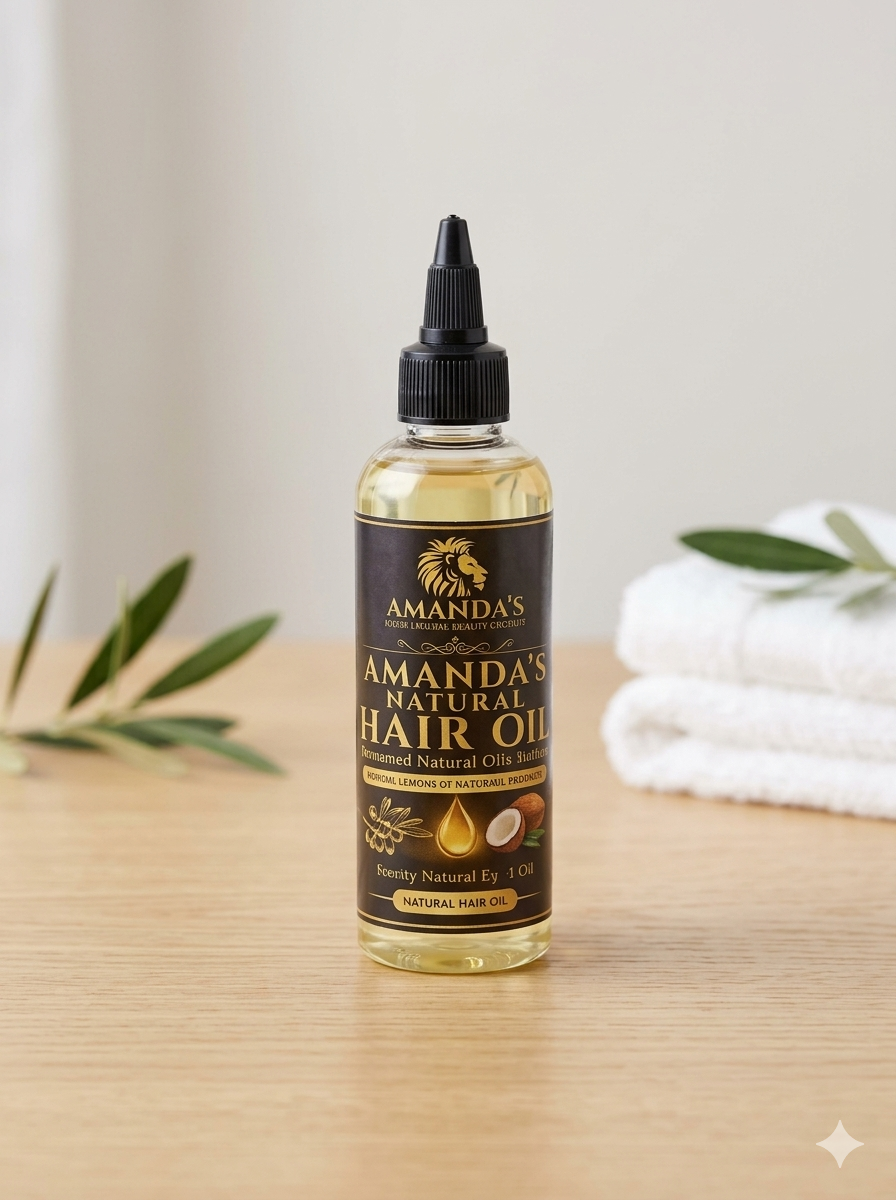
At Amanda’s Natural Products, we believe in the power of nature. We carefully formulate our products using natural oils and ingredients, including locally sourced and locally produced oils from right here in Guyana. 🇬🇾
From Okra Seed Oil and Monkey Apple Oil to Peanut Oil and other natural plant oils, we explore what nature has to offer for healthy-looking hair, nourished skin, and quality natural formulations.
🌿 Nourished by Nature, Crafted Locally.
Amanda’s Natural Products — The Healthy Choices
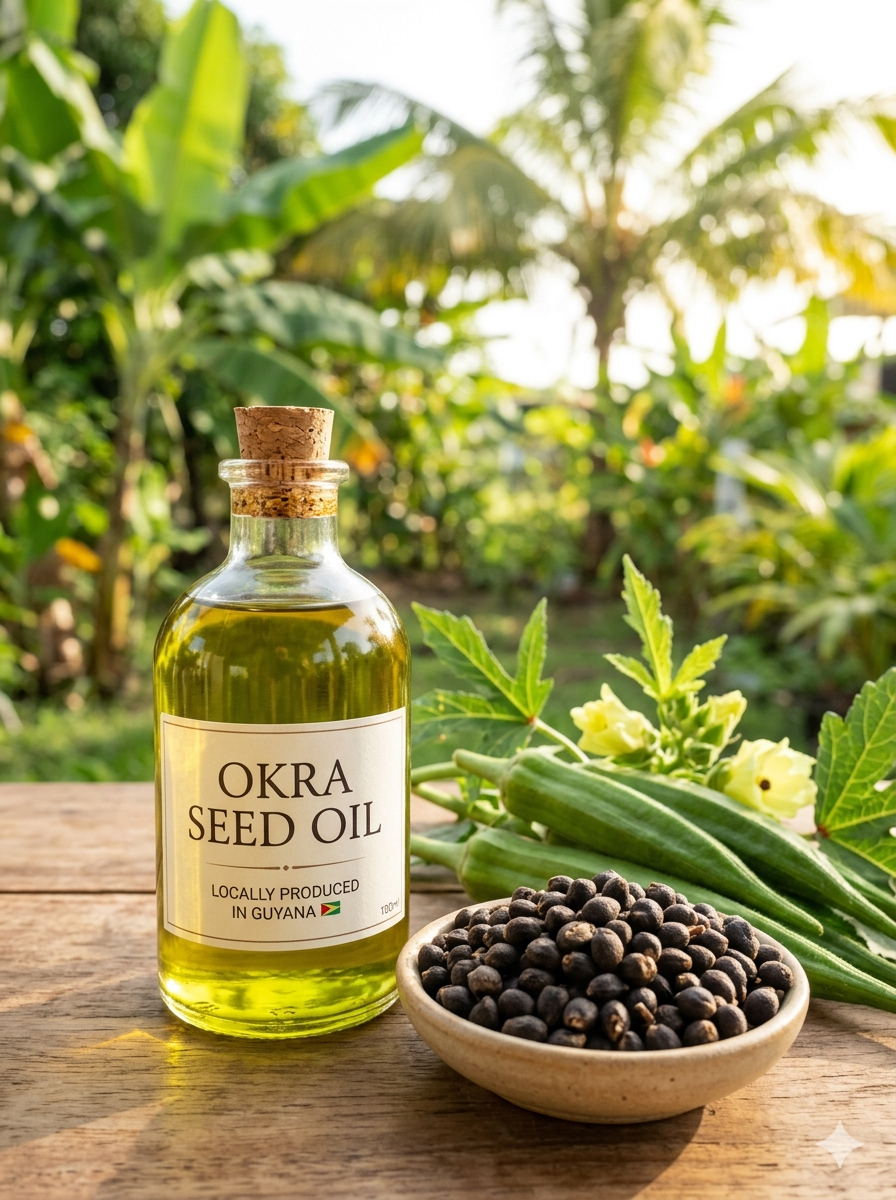
Okra Seed Oil
Okra Seed Oil is a nutrient-rich botanical oil obtained from the mature seeds of okra (Abelmoschus esculentus). Research on the oil has identified a high proportion of unsaturated fatty acids, particularly linoleic acid and oleic acid, together with tocopherols, phenolic compounds, sterols and fat-soluble vitamins. One study found approximately 65.5% unsaturated fatty acids, including about 43% linoleic acid and 20% oleic acid. (PubMed Central (PMC))
Hair Benefits
Helps moisturize and condition dry, coarse and textured hair.
Helps soften the hair and improve manageability.
Helps smooth the hair strands and improve natural shine.
Helps reduce the dry, rough feeling associated with moisture loss.
Provides lubrication that can make detangling and combing easier.
Helps reduce friction between hair strands, which can assist in protecting fragile hair from unnecessary mechanical breakage.
Its linoleic- and oleic-acid content makes it a useful conditioning oil in hair formulations.
Helps nourish and condition a dry scalp.
Can be incorporated into products designed for natural, curly, coily and textured hair.
Works well in both lighter oil blends and richer hair foods and butters.
Skin Benefits
Acts as a natural emollient, helping dry and rough skin feel softer and smoother.
Helps maintain moisture by providing an oil-based protective layer over the skin.
Its fatty-acid composition makes it useful in formulations designed to support the skin's natural lipid barrier.
Contains naturally occurring tocopherols and phenolic compounds with antioxidant activity. (PubMed Central (PMC))
Helps improve the feel and suppleness of dry skin.
Can be incorporated into both facial and body-care formulations.
Particularly useful when formulating moisturizing oils, creams, butters and balms.
Naturally Occurring Components
Research has identified linoleic acid, oleic acid, palmitic acid and stearic acid among the important fatty acids in okra seed oil. Studies have also identified tocopherols, phenolic compounds and plant sterols. (ScienceDirect)
A 2024 analysis also detected the fat-soluble vitamins A, D and K1 in okra seed oil and reported substantial levels of alpha- and gamma-tocopherols. (PubMed Central (PMC))
Blends Well With
Okra Seed Oil can be blended with:
Coconut Oil — for richer conditioning in hair foods, oils, creams and body products.
Castor Oil — for heavier, more protective hair, scalp and body-oil blends.
Olive Oil — for moisturizing hair, skin, massage and body-care formulations.
Peanut Oil — for emollient hair and skincare blends.
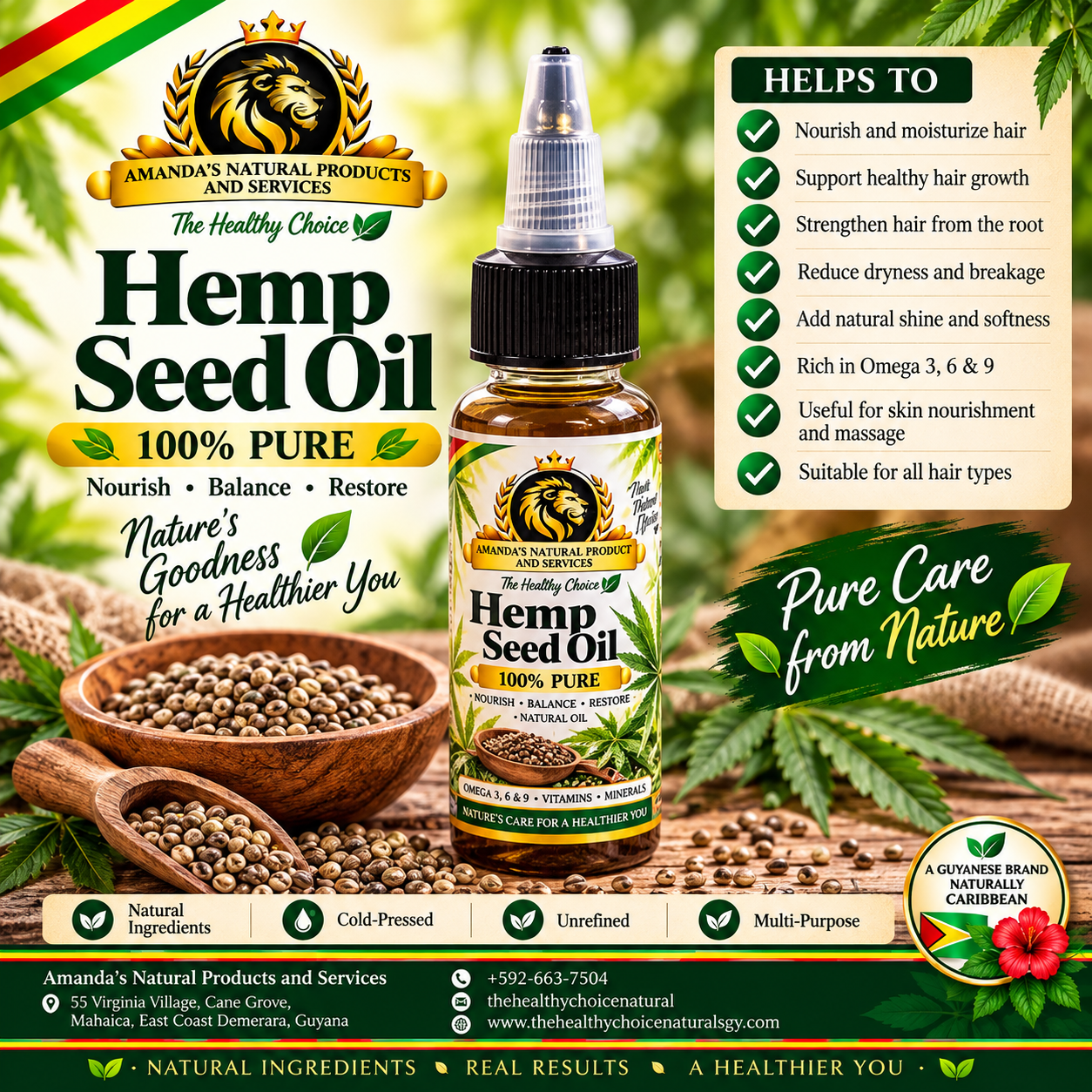
Hemp Seed Oil — for a broader fatty-acid profile in hair and skincare formulations.
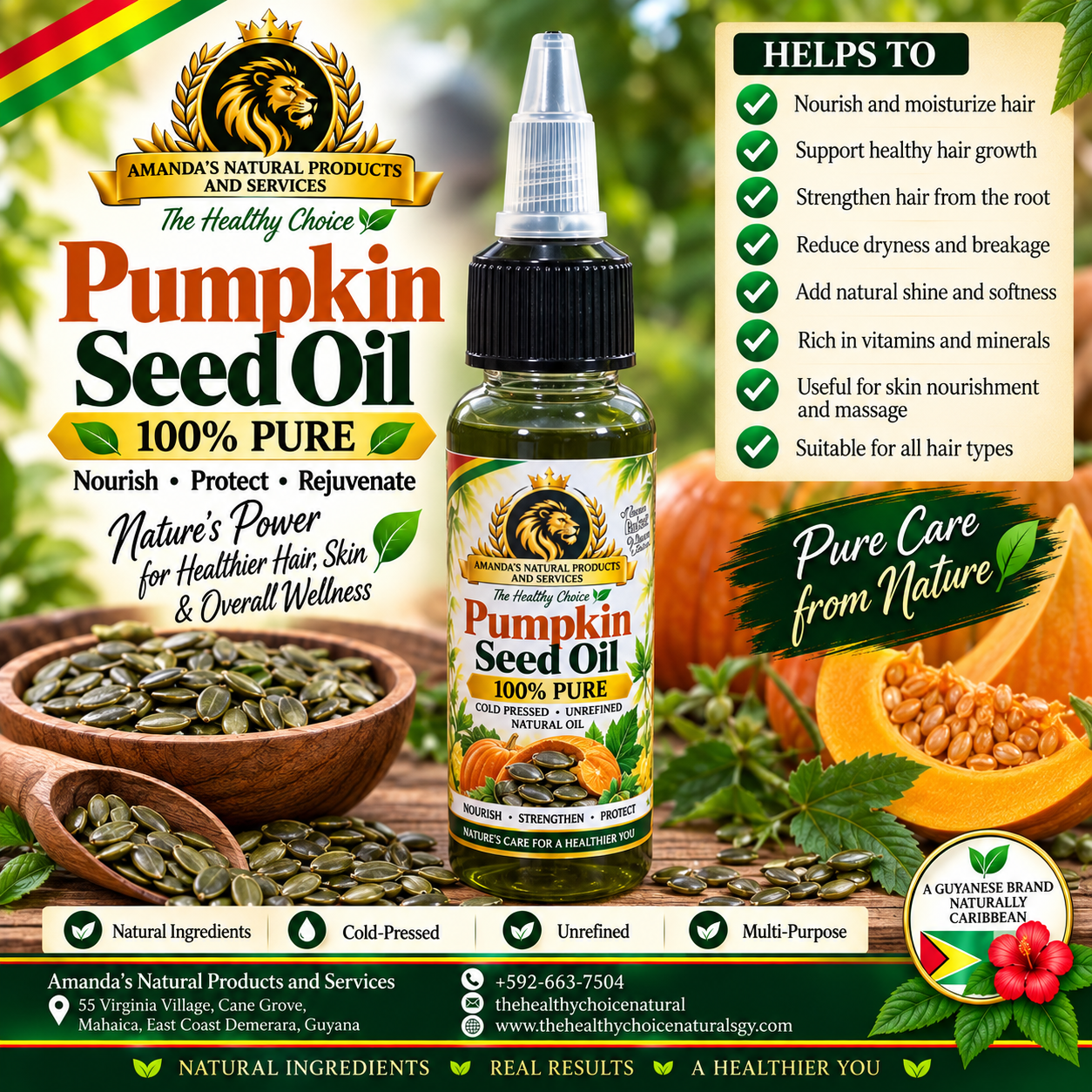
Pumpkin Seed Oil — useful in nutrient-rich hair, scalp and skin formulations.
Sunflower Oil — useful when a lighter-feeling, linoleic-rich carrier oil is desired.
Shea Butter — for rich hair foods, body butters, creams and balms.
Cocoa Butter — for firmer, protective body butters, creams and balms.
Beeswax — for structuring balms, hair products and other anhydrous formulations.
Can Be Incorporated Into
Hair oils • Scalp oils • Hair foods • Hair creams • Hair butters • Leave-in conditioners • Rinse-out conditioners • Pre-shampoo treatments • Shampoos • Body oils • Facial oils • Moisturizing creams • Lotions • Body butters • Balms • Massage oils • Soaps and other cosmetic formulations
Why Okra Seed Oil?
Okra Seed Oil offers more than simple lubrication. Its combination of unsaturated fatty acids, tocopherols, phenolic compounds and sterols makes it an interesting botanical oil for modern natural hair and skincare formulation. Research has also demonstrated measurable antioxidant activity in okra seed oil. (PubMed Central (PMC))
Contact Amanda’s Natural Products for more information.
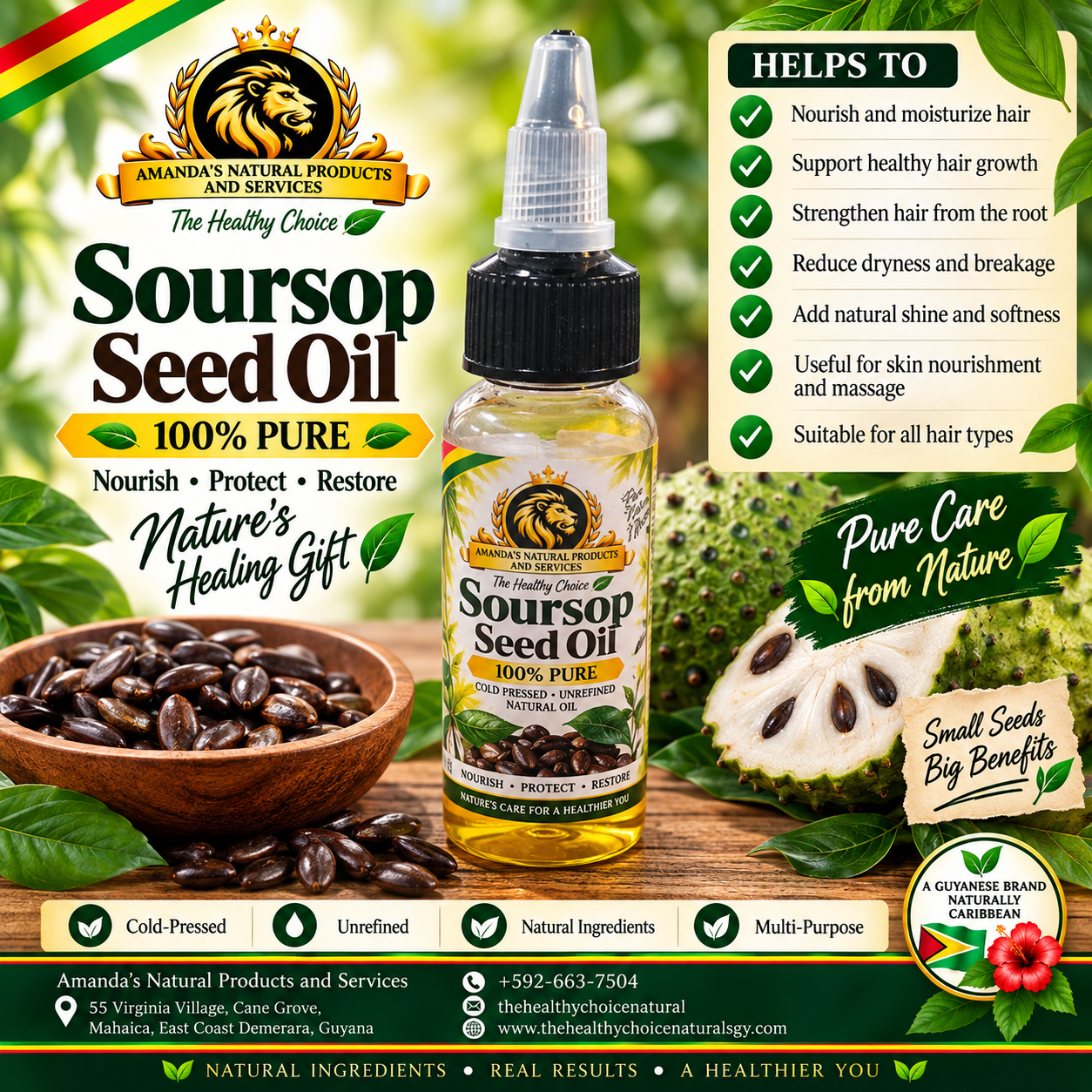
Soursop Seed Oil — Hair, Skin & Formulation Benefits
Skin Benefits
Helps moisturize and soften dry, rough skin.
Rich in fatty acids, particularly oleic and linoleic acids, which provide valuable emollient properties.
Helps reduce moisture loss and supports the skin's natural lipid barrier.
Contains naturally occurring antioxidant compounds that can help protect the oil and skin from oxidative stress.
Helps improve skin softness and suppleness.
Useful in formulations for dry and weather-exposed skin.
Provides good lubrication for body and massage products.
Can be incorporated into facial and body formulations.
Hair & Scalp Benefits
Helps condition dry, coarse and textured hair.
Softens the hair and improves manageability.
Helps smooth frizz and flyaways.
Adds natural shine.
Lubricates the hair strands, helping reduce friction during combing and styling.
Helps reduce moisture loss from dry hair.
Useful in scalp oils and treatments designed to condition a dry scalp.
Works well in richer formulations for curly, coily and textured hair.
Can Be Incorporated Into
Hair oils • Scalp oils • Hair foods • Hair creams • Hair butters • Conditioners • Pre-shampoo treatments • Body oils • Facial oils • Creams • Lotions • Body butters • Balms • Massage oils • Soaps and other cosmetic formulations
Blends Well With
Coconut Oil — for rich hair and skin conditioning.
Castor Oil — for heavier, more protective hair and scalp blends.
Olive Oil — for moisturizing hair and body formulations.
Okra Seed Oil — for botanical hair, scalp and skincare blends.
Peanut Oil — for emollient hair and body formulations.
Hemp Seed Oil — for a broader fatty-acid profile.
Pumpkin Seed Oil — for nutrient-rich hair and scalp formulations.
Sunflower Oil — for lighter-feeling hair and skincare blends.
Shea Butter — for hair foods, creams, body butters and balms.
Cocoa Butter — for richer body butters and protective formulations.
Beeswax — for balms and other structured oil-based products.
Caution
Soursop seeds should not be treated as an ordinary edible seed. They contain biologically active compounds, including annonaceous acetogenins.
Soursop seed oil intended for cosmetic use should not be consumed.
Avoid contact with the eyes and other sensitive areas.
Patch-test before widespread topical use.
Discontinue use if irritation, redness or discomfort develops.
Keep away from children.
Proper formulation levels and cosmetic safety practices are especially important with seed-derived soursop ingredients.
Water-containing products made with the oil still require an appropriate preservative system.
Contact Amanda’s Natural Products for more information..
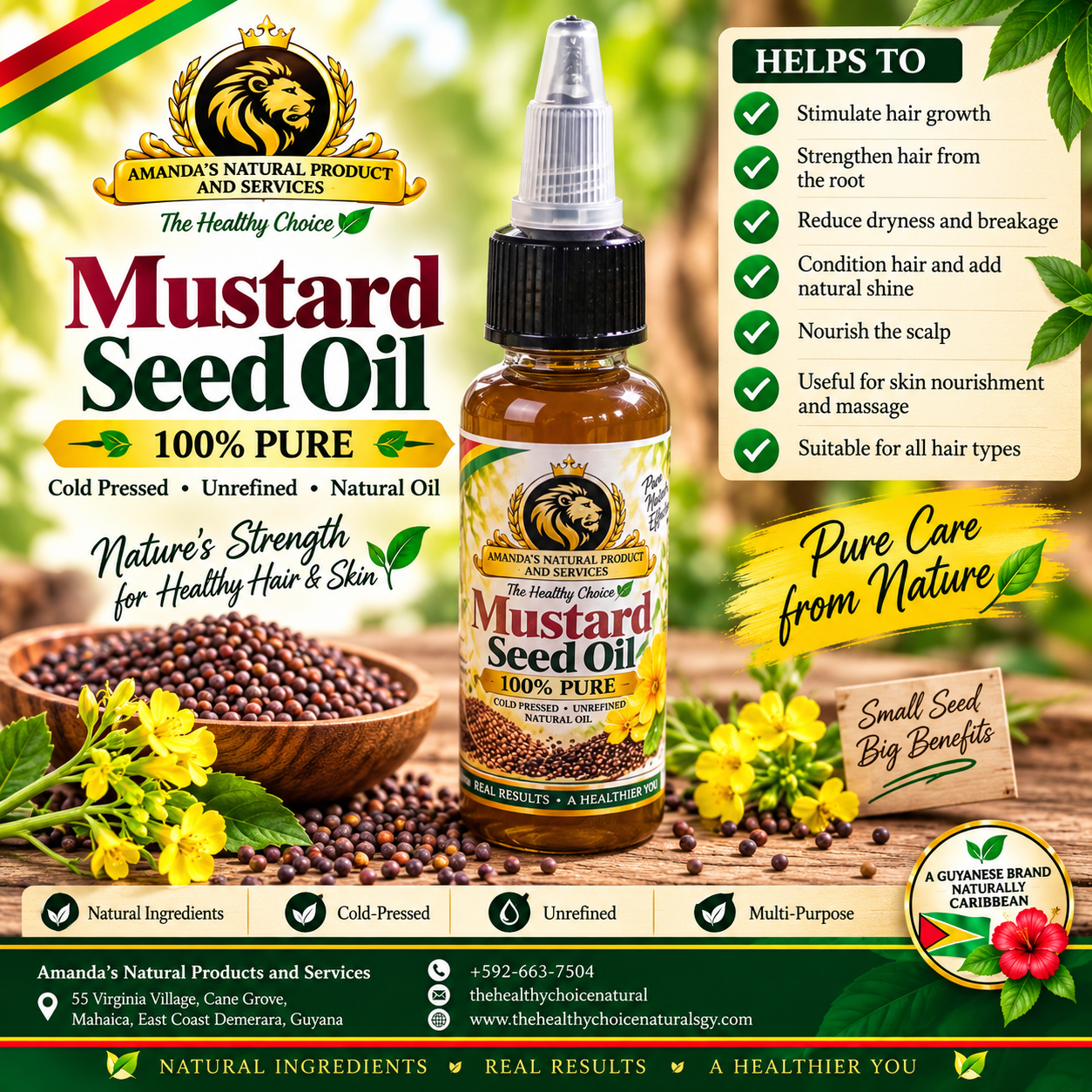
Monkey Apple Seed Oil — Hair, Skin & Formulation Benefits
Monkey Apple (Annona glabra), also known as pond apple or alligator apple, is found in Guyana and other tropical regions. Its seeds contain oil and naturally occurring bioactive compounds. In Guyanese traditional practice, preparations made from Monkey Apple seeds have been used externally, particularly for the hair and scalp.
Skin Benefits
Moisturizing: Helps soften and condition dry, rough skin.
Emollient action: Its fatty-acid content helps form a protective layer that reduces moisture loss.
Skin softness: Helps leave dry skin feeling smoother and more supple.
Antioxidant support:Annona glabra contains a range of naturally occurring plant compounds that have attracted scientific interest for antioxidant and other biological activities.
Protective formulations: Can contribute richness and lubrication to oil-based body-care products.
Dry-skin care: Can be incorporated into formulations intended to condition particularly dry areas of the body.
Hair & Scalp Benefits
Traditional Guyanese scalp use: Monkey Apple seeds have traditionally been prepared with oils, including coconut oil, for external scalp applications.
Conditions dry hair: Helps coat and lubricate dry strands.
Moisture retention: An oil layer can help reduce moisture loss from the hair.
Frizz control: Helps smooth rough strands and tame flyaways.
Natural shine: Coating the hair shaft can produce a smoother, glossier appearance.
Improved manageability: Lubrication helps reduce friction during combing and styling.
Scalp conditioning: Useful in oil formulations intended for a dry scalp.
Traditional Use for Head Lice
One particularly important traditional use of Annona seeds is in preparations intended to control head lice. Annona species contain potent bioactive compounds, including acetogenins, which have insecticidal activity.
Because of that potency, this traditional use should not be confused with ordinary everyday cosmetic use. Products intended specifically for lice treatment require careful formulation and safety consideration.
Can Be Incorporated Into
Hair oils • Scalp oils • Hair foods • Hair creams • Hair butters • Pre-shampoo treatments • Body oils • Body butters • Balms • Soaps and other carefully formulated external-use products
Blends Well With
Coconut Oil — particularly relevant to the traditional Guyanese preparation of Monkey Apple seeds for the scalp.
Castor Oil — for richer, heavier scalp and hair-oil formulations.
Okra Seed Oil — for conditioning botanical hair blends.
Olive Oil — for moisturizing hair and body formulations.
Peanut Oil — for emollient hair and body-oil blends.
Sunflower Oil — for a lighter carrier-oil blend.
Shea Butter — for richer hair foods, body butters and balms.
Beeswax — for structured external-use balms and anhydrous products.
⚠️ Important Caution
Monkey Apple seed preparations deserve greater caution than ordinary cosmetic carrier oils because Annona seeds contain biologically active acetogenins.
For external use only — do not ingest Monkey Apple seed oil.
Avoid contact with the eyes, mouth and other sensitive areas.
Perform a patch test before broader skin or scalp application.
Discontinue use if irritation, burning, redness or other adverse reactions occur.
Keep away from children.
Do not assume that because an ingredient is natural it is automatically safe at every concentration.
Products intended specifically to treat or eliminate head lice should be formulated and labelled separately from ordinary cosmetic hair oils.
Contact Amanda’s Natural Products for more information.
Passion fruit—scientifically known as Passiflora edulis or Maracuja oil
What Makes it Work?
Before diving into the areas of application, it helps to understand its unique chemical composition. Passion fruit seed oil is exceptionally high in essential fatty acids (EFAs), particularly Linoleic Acid (Omega-6), which makes up about 70% of the oil. It also contains Oleic Acid (Omega-9), Palmitic Acid, and a rare, incredibly potent antioxidant called Piceatannol. This precise molecular makeup allows it to nourish the body deeply without being heavy or occlusive.
Benefits for the Skin
1. Advanced Moisture Retention without Clogging Pores
Many natural oils (like coconut or wheat germ) have high comedogenic ratings, meaning they can trap bacteria and clog pores. Passion fruit oil is a "dry oil." It contains small molecules that match the skin’s natural lipid barrier. When applied, it absorbs instantly into the epidermis, creating a breathable shield that prevents Transepidermal Water Loss (TEWL). It leaves the skin feeling velvety soft rather than greasy.
2. Cellular Regeneration and Anti-Aging
The skin ages due to environmental stressors and the natural slowdown of collagen production. Passion fruit is a massive source of Vitamin C (Ascorbic Acid) and Vitamin A (in the form of carotenoids).
Vitamin C is a vital cofactor in collagen synthesis; it literally signals your skin cells to produce more structural protein, filling in fine lines and firming up sagging skin.
Vitamin A speeds up cellular turnover, meaning dead, dull skin cells shed faster to reveal fresh, glowing skin underneath.
3. Hyper-Pigmentation and Sun Damage Correction
The secret weapon in passion fruit is Piceatannol, a powerful stilbenoid antioxidant structurally similar to resveratrol. Clinical research shows that piceatannol actively inhibits melanogenesis—the process that creates dark spots and uneven skin tone after sun exposure or acne scarring. Regularly using passion fruit on the skin helps fade stubborn hyperpigmentation and restores a uniform, bright complexion.
4. Sebum Control for Acne-Prone Skin
It sounds counterintuitive to put oil on oily or acne-prone skin, but a lack of linoleic acid actually causes acne. When skin lacks linoleic acid, its natural sebum becomes thick, sticky, and highly likely to plug pores. Because passion fruit oil is overwhelmingly rich in linoleic acid, it dilutes hardened sebum, breaks up blockages, and trains the skin to produce a healthier, well-balanced amount of oil.
5. Rapid Inflammation Relief
For individuals suffering from eczema, psoriasis, or rosacea, the skin barrier is chronically compromised and inflamed. Passion fruit contains high amounts of bioflavonoids, which act as natural anti-inflammatories. They work at a cellular level to suppress the chemical triggers of redness and swelling, instantly cooling irritated skin and helping the physical skin barrier rebuild itself.
Benefits for the Hair and Scalp
1. Keratin Reinforcement and Breakage Defense
Hair is mostly made of a tough, fibrous protein called keratin. To keep this protein structure flexible and strong, the hair shaft needs a balance of moisture and amino acids. Passion fruit contains essential amino acids, including lysine, which help repair structural gaps in damaged hair cuticles. By coating the hair shaft, it fills in micro-tears caused by heat styling, chemical dyeing, or environmental pollution, significantly reducing split ends and snapping.
2. Scalp Microbiome Balancing and Dandruff Prevention
A healthy head of hair cannot grow from an unhealthy, inflamed scalp. Dandruff and flaking are often caused by an overgrowth of a natural fungus called Malassezia, which thrives on poor-quality oils. Passion fruit oil possesses natural, mild antimicrobial and antifungal properties. When massaged into the scalp, it moisturizes dry skin patches while keeping the scalp microbiome balanced, effectively preventing the itchiness and flaking associated with dandruff.
3. Follicle Stimulation and Hair Growth
To maximize hair growth, blood vessels must efficiently deliver oxygen and nutrients to the root of the hair follicle. Passion fruit is rich in circulation-boosting minerals like copper, iron, and zinc. When massaged into the root area, these nutrients help dilate capillaries and optimize nutrient delivery directly to the hair matrix, encouraging a longer active growth phase (anagen phase) and helping to combat premature thinning.
4. Moisture Locking and Frizz Eradication
For curly, coily, or highly porous hair, humidity is a constant battle because dry hair absorbs moisture from the air, causing the cuticles to expand and frizz. The fatty acids in passion fruit oil act as a hydrophobic (water-repelling) sealant. By running a few drops through damp hair, you lock in the water already inside the strand and block out external humidity, keeping curls defined, sleek, and manageable all day.
The Extra Healing Benefits ("Etc.")
1. Environmental Protection (An Antioxidant Shield)
Every day, our skin and body are bombarded by free radicals—unstable molecules caused by UV rays, smog, and cigarette smoke that destroy healthy cells. The vast array of antioxidants in passion fruit (including vitamin E and lycopene) act as a personal security detail for your cells. They neutralize these free radicals before they can cause oxidative stress or cellular damage, acting as a secondary line of defense alongside your daily sunscreen.
2. Aromatherapeutic Nervous System Relaxation
Passion fruit isn't just physically beneficial; it is emotionally therapeutic. The natural compounds in the fruit and seed oil have a gentle, soothing scent profile that interacts with the olfactory system to reduce stress hormones like cortisol. When used in body lotions, massage oils, or bath products, it helps soothe a racing mind, relaxes tense muscles, and promotes a deeper, more restorative night's sleep.
3. Intense Cuticle and Nail Repair
Because the oil is so deeply penetrating and rich in vitamin E, it works wonders on the hard, protective layers of the body, like nails and cuticles. Massaging it into the nail beds strengthens brittle nails, prevents painful hangnails, and encourages faster, thicker nail growth by keeping the surrounding tissue intensely hydrated.
To help us flesh this out even more for your brand, let me know:
Would you like me to dive deeper into how passion fruit interacts with specific skin types (like mature skin versus teenage acne)?
Do you want to include a detailed section on how your customers should step-by-step apply it to get the best results?
Should we expand on how passion fruit pairs with other specific oils you might be using in Amanda's Natural Products?
Peanut Oil (Arachis hypogaea)
Peanut Oil is a rich botanical oil valued in both traditional care and modern cosmetic formulation. Its naturally occurring fatty acids—particularly oleic acid and linoleic acid—give it strong emollient, conditioning and lubricating properties. It also contains vitamin E compounds, phytosterols and other naturally occurring plant constituents that contribute to its usefulness in hair and skincare products.
Because Peanut Oil is richer and more substantial than many lightweight botanical oils, it is particularly useful in products designed for dry skin, coarse or textured hair, massage applications and protective formulations.
Key Natural Components
Oleic Acid (Omega-9): Provides softness, lubrication and rich emollient properties.
Linoleic Acid (Omega-6): An essential fatty acid that contributes to skin-barrier and conditioning formulations.
Palmitic and Stearic Acids: Add body and protective qualities to the oil.
Tocopherols (Vitamin E compounds): Naturally occurring antioxidants that help protect lipids from oxidation.
Phytosterols: Plant sterols that contribute to the conditioning and soothing character of botanical oils.
Benefits for the Skin
Deep Moisturization
Peanut Oil acts as an effective emollient, coating the skin with a lipid-rich layer that helps reduce moisture loss. This makes it especially useful for dry, rough or weather-exposed skin.
Supports the Skin Barrier
The outer layer of the skin relies heavily on lipids to remain flexible and properly conditioned. Peanut Oil supplies fatty acids that can complement the lipid phase of creams, lotions, body butters and other moisturizing formulations.
Softens Rough Skin
Its high oleic-acid content gives Peanut Oil excellent softening properties. It can help rough areas such as the hands, feet, elbows and knees feel smoother and more supple.
Antioxidant Support
Naturally occurring vitamin E compounds help protect oils and skin lipids against oxidative stress. This makes Peanut Oil useful in formulations intended to support healthy-looking, well-conditioned skin.
Improves Skin Suppleness
Regular use in properly formulated products can help dry skin feel more flexible, comfortable and smooth.
Useful for Mature and Very Dry Skin
Because Peanut Oil has a richer feel than many "dry" oils, it can be particularly valuable in products formulated for mature, very dry or coarse-feeling skin.
Benefits for Hair & Scalp
Conditions Dry and Coarse Hair
Peanut Oil coats and lubricates the hair shaft, helping dry or textured hair feel softer and easier to manage.
Helps Reduce Mechanical Breakage
Hair strands experience friction during combing, brushing and styling. An oil coating helps individual strands slide past each other more easily, reducing unnecessary pulling and friction.
Improves Manageability
Its lubricating properties can make detangling easier, particularly for curly, coily, coarse and highly textured hair.
Helps Control Frizz
Applied in appropriate amounts, Peanut Oil can smooth the surface of the hair and help reduce the rough appearance associated with raised or damaged cuticles.
Adds Natural Shine
By smoothing and coating the hair shaft, the oil can improve light reflection and leave hair looking healthier and shinier.
Helps Reduce Moisture Loss
Used after water-based moisturizing products, Peanut Oil can act as a sealing oil that helps slow moisture loss from the hair.
Conditions a Dry Scalp
Its rich emollient properties make it useful in scalp-oil formulations designed to soften and condition dry, flaky-feeling scalp skin.
Massage & Body Care
Peanut Oil provides excellent massage glide because it does not disappear as quickly as some lightweight oils. This allows the hands to move smoothly over the skin without constant reapplication.
It can therefore serve as a useful base for:
Body and massage oils
Herbal-infused oils
Spa treatments
Hand and foot oils
Rich body creams
Protective body butters
Traditional warm-oil massage also combines the lubricating properties of the oil with the physical benefits of massage, such as relaxation and temporary relief of muscular tension.
Hands, Feet & Rough Areas
Peanut Oil can be particularly useful on areas where the skin naturally becomes thicker and drier, such as:
Heels
Soles
Elbows
Knees
Knuckles
Cuticles
Its emollient action helps soften hardened, dry-feeling skin and makes it a useful ingredient in foot creams, hand creams, balms and intensive body butters.
Blends Well With
Peanut Oil can be blended with:
Coconut Oil — for richer hair and body conditioning.
Castor Oil — for heavier, more protective hair and scalp formulations.
Olive Oil — for moisturizing hair, massage and body-care blends.
Okra Seed Oil — for conditioning botanical hair and skincare formulations.
Passion Fruit Seed Oil — to balance Peanut Oil's richness with a lighter, highly unsaturated oil.
Hemp Seed Oil — for a broader fatty-acid profile.
Pumpkin Seed Oil — for nutrient-rich hair, scalp and body formulations.
Sunflower Oil — for a lighter-feeling blend.
Shea Butter — for rich hair foods, body butters, creams and balms.
Cocoa Butter — for firm, protective body formulations.
Beeswax — for balms and structured anhydrous products.
Can Be Incorporated Into
Hair oils • Scalp oils • Hair foods • Hair creams • Hair butters • Pre-shampoo treatments • Conditioners • Body oils • Massage oils • Face and body creams • Lotions • Body butters • Hand and foot creams • Balms • Soaps and other cosmetic formulations
Caution & Allergen Awareness
Peanut is a recognized allergen, so transparency is particularly important when it is used in cosmetic formulations.
Clearly identify Peanut Oil / Arachis hypogaea oil on the ingredient list.
Individuals with known or severe peanut allergies should exercise caution with peanut-derived products.
Patch-test before widespread topical use.
Discontinue use if irritation, redness, itching or discomfort develops.
Avoid direct contact with the eyes.
Keep cosmetic products out of the reach of children.
Only food-grade Peanut Oil should be consumed. Cosmetic formulations containing Peanut Oil should not be ingested.
Store the oil and finished products away from excessive heat, sunlight and air exposure.
Water-containing creams, lotions and conditioners still require an appropriate preservation system.
Contact Amanda’s Natural Products for more information..
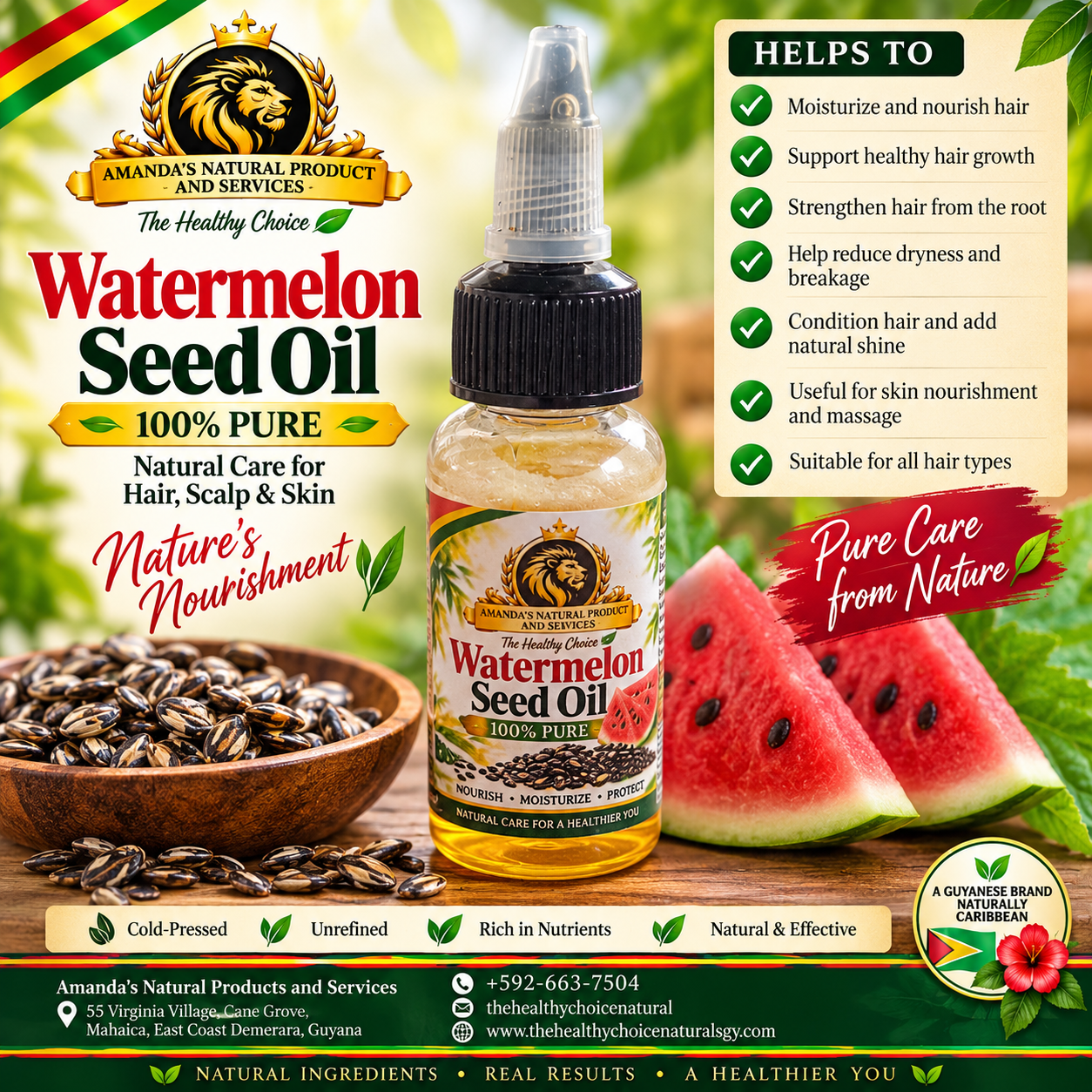
Watermelon Seed Oil
Watermelon Seed Oil, sometimes known as Kalahari Oil or Ootanga Oil, is a lightweight botanical oil extracted from watermelon seeds. Rich in linoleic acid (Omega-6), oleic acid (Omega-9), tocopherols (Vitamin E), phytosterols and other naturally occurring plant compounds, it is valued in modern cosmetic formulation for its light texture, conditioning properties and versatility.
Unlike heavier botanical oils, Watermelon Seed Oil has a light, silky skin feel, making it particularly useful when nourishment is desired without an excessively greasy finish.
Benefits for the Skin
Lightweight Moisturization
Watermelon Seed Oil helps soften and moisturize the skin while maintaining a relatively light finish. Its fatty acids provide emollient properties that help reduce moisture loss and improve skin softness.
Supports the Skin Barrier
Its high linoleic-acid content makes it particularly interesting for formulations designed to support the skin's natural lipid barrier and maintain healthy moisture balance.
Suitable for Oily and Combination Skin
Because of its lighter texture and linoleic-rich fatty-acid profile, Watermelon Seed Oil can be incorporated into facial formulations designed for oily, combination and blemish-prone skin, where very heavy oils may be undesirable.
Antioxidant Support
Naturally occurring tocopherols and other antioxidant compounds help protect the oil and contribute antioxidant properties to cosmetic formulations.
Improves Skin Feel
Watermelon Seed Oil works as an elegant emollient, improving the spreadability and sensory feel of creams, lotions, facial oils and serums.
Dry and Weather-Exposed Skin
Although lightweight, it can still provide valuable conditioning for dry skin, particularly when combined with richer oils and butters.
Benefits for Hair & Scalp
Lightweight Hair Conditioning
Watermelon Seed Oil conditions dry hair without the extremely heavy coating associated with some richer oils.
Useful for Fine and Low-Porosity Hair
Its lighter character makes it particularly useful when formulating products where excessive heaviness or oil buildup is undesirable.
Helps Reduce Frizz
The oil helps lubricate and smooth the hair shaft, improving the appearance of frizz and flyaways.
Adds Natural Shine
By smoothing the hair surface, Watermelon Seed Oil can help hair appear shinier and better conditioned.
Helps Reduce Moisture Loss
Applied after a water-based moisturizer or incorporated into a conditioning formulation, the oil can help slow moisture loss from the hair.
Improves Manageability
Its lubricating properties help reduce friction between strands, making combing, detangling and styling easier.
Scalp Conditioning
Watermelon Seed Oil can be incorporated into lightweight scalp oils and treatments intended to condition dry-feeling scalp skin without creating an excessively heavy finish.
Can Be Incorporated Into
Hair oils • Scalp oils • Hair serums • Hair creams • Hair foods • Leave-in conditioners • Rinse-out conditioners • Curl creams • Pre-shampoo treatments • Facial oils • Facial serums • Body oils • Creams • Lotions • Body butters • Massage oils • Balms • Soaps and other cosmetic formulations
Blends Well With
Monkey Apple Oil — combines a richer botanical oil with the lighter feel of Watermelon Seed Oil.
Okra Seed Oil — for conditioning botanical hair and skincare formulations.
Coconut Oil — for richer hair and body conditioning.
Castor Oil — Watermelon Seed Oil can help lighten the sensory feel of a heavier castor-oil blend.
Peanut Oil — combines a richer emollient oil with a lighter carrier oil.
Passion Fruit Seed Oil — creates a lightweight blend rich in unsaturated fatty acids.
Olive Oil — for moisturizing hair and body formulations.
Hemp Seed Oil — for a broader essential fatty-acid profile.
Pumpkin Seed Oil — for nutrient-rich hair and scalp formulations.
Sunflower Oil — complements its linoleic-rich fatty-acid profile.
Shea Butter — for creams, hair foods and body butters where a lighter liquid oil is needed.
Beeswax — for balms and structured oil-based formulations.
Formulation Synergy: Monkey Apple + Watermelon Seed Oil
These two oils can play complementary roles in formulation.
Monkey Apple Oil can provide the richer component of a botanical oil blend, while Watermelon Seed Oil can contribute a lighter texture and improved spreadability.
For hair and scalp formulations, this combination can be explored where you want the richness of Monkey Apple Oil without making the finished product unnecessarily heavy.
For skincare, Watermelon Seed Oil can be useful in lighter daytime formulations, while richer oils and butters can be reserved for more intensive products.
Caution
Patch-test before widespread skin or scalp application.
Discontinue use if irritation, redness or discomfort develops.
Avoid direct contact with the eyes.
Individuals with known watermelon or seed sensitivities should exercise caution.
Store in a cool, dark place, tightly closed and protected from excessive heat, sunlight and air exposure.
Because Watermelon Seed Oil contains a high proportion of unsaturated fatty acids, good storage and oxidation control are important.
Vitamin E or another suitable antioxidant may help slow oxidation in an oil-based formulation, but an antioxidant is not a preservative.
Water-containing creams, lotions, conditioners and similar products require an appropriate preservation system.
Only oil specifically produced and handled as food-grade should be consumed; cosmetic-grade oil should not be ingested.
Contact Amanda’s Natural Products for more information..
Clinical-Level Beauty Services
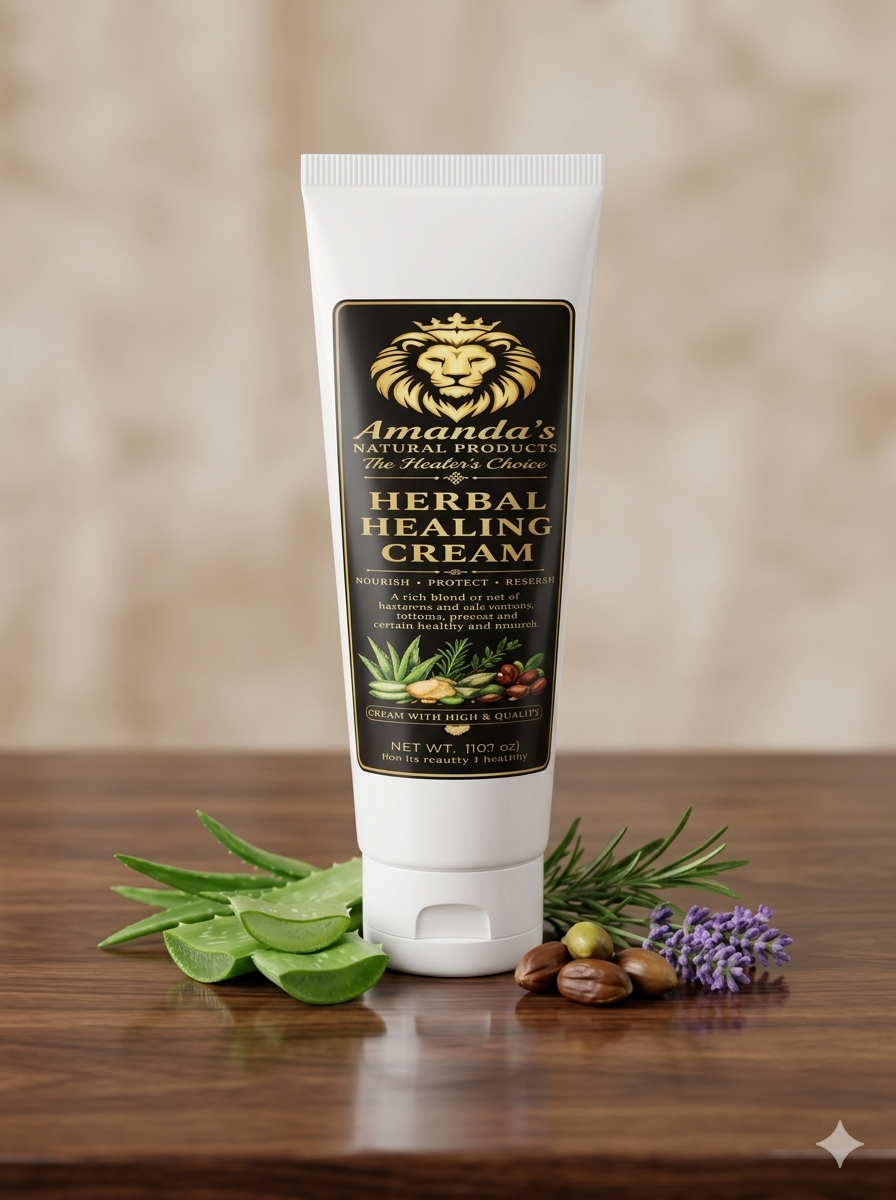
Amanda’s Herbal Healing Cream
Nourish • Moisturise • Soothe • Protect
Amanda’s Herbal Healing Cream is a rich botanical skin-care cream created by Amanda’s Natural Products using a carefully selected combination of plant oils, butters and herbal ingredients. Designed for everyday skin care, the formula combines shea butter, fresh aloe vera, rosemary-infused oil, castor oil, hemp seed oil, pumpkin seed oil, bitter melon seed oil, peppermint oil and lantana-infused oil.
The result is a deeply conditioning cream created especially for skin that needs additional moisture, softness and protection.
Shea Butter
Shea butter forms a rich, emollient foundation for the cream. Naturally containing fatty acids, it helps soften the skin and reduce moisture loss by supporting the skin's protective surface.
Fresh Aloe Vera
Aloe vera brings a light, soothing and hydrating element to the formula. It has a long history of use in topical skin preparations and complements the richer oils and butters in the cream.
Rosemary-Infused Oil
Rosemary-infused oil combines a carrier oil with botanical constituents extracted from rosemary during the infusion process. It contributes to the cream's herbal character while complementing the other conditioning oils.
Castor Oil
Castor oil is particularly rich in ricinoleic acid, giving it a distinctive texture and emollient character. In skin-care preparations, it helps provide richness, lubrication and a protective feel.
Hemp Seed Oil
Hemp seed oil contains essential fatty acids, particularly linoleic and alpha-linolenic acids. Its fatty-acid profile makes it a valuable addition to formulations designed to condition and support dry-feeling skin.
Pumpkin Seed Oil
Pumpkin seed oil contributes naturally occurring fatty acids and other lipid-soluble compounds. It complements the richer ingredients while adding another botanical source of skin-conditioning lipids.
Bitter Melon Seed Oil
Bitter melon seed oil adds another distinctive botanical element to the formulation. Used as part of the oil phase, it contributes to the cream's emollient and conditioning properties.
Lantana-Infused Oil
Lantana-infused oil reflects the traditional herbal character of Amanda’s formulation. The infusion allows oil-soluble components of the plant material to become incorporated into the carrier oil, which is then blended into the finished cream.
Peppermint Oil
Peppermint oil provides the formula with its characteristic fresh, cooling sensation and aromatic herbal note. Because essential oils are concentrated ingredients, it is incorporated as part of the overall formulation rather than used alone on the skin.
Rich Care for Everyday Skin
Amanda’s Herbal Healing Cream can be applied to areas that feel dry, rough or in need of additional moisturising and conditioning. Its combination of rich oils, botanical infusions, aloe vera and shea butter makes it particularly useful as part of an everyday body-care routine.
Apply a small amount and massage gently into the skin until distributed. Use as required.
A Note About the Name
“Herbal Healing Cream” is the traditional product name. This is a cosmetic skin-care product intended to moisturise, condition and care for the skin. It is not presented as a medicine or as a treatment or cure for disease.
Featured Ingredients: Shea Butter • Fresh Aloe Vera • Rosemary-Infused Oil • Castor Oil • Hemp Seed Oil • Pumpkin Seed Oil • Bitter Melon Seed Oil • Lantana-Infused Oil • Peppermint Oil
Amanda’s Natural Products
The Healthy Choices
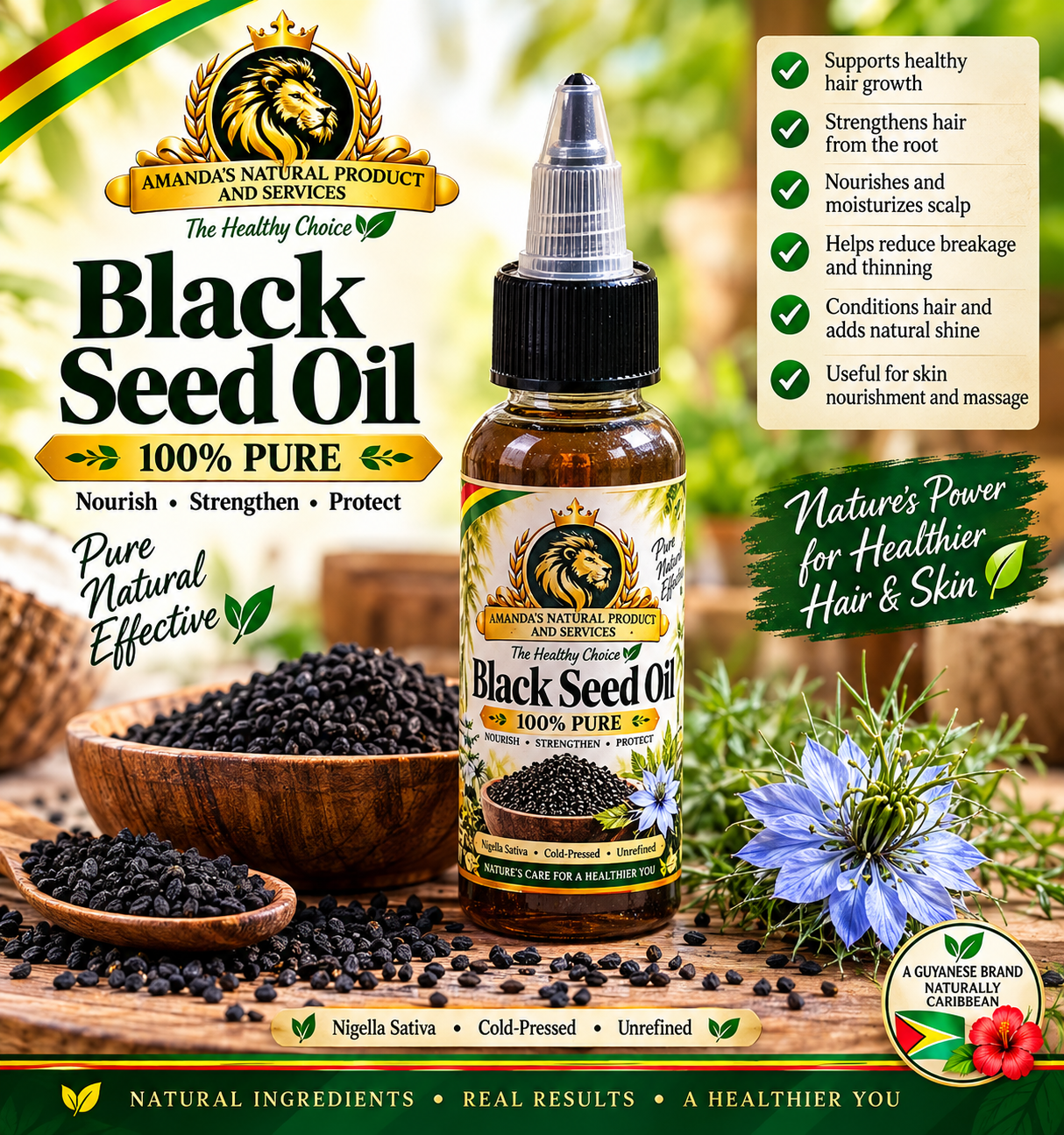
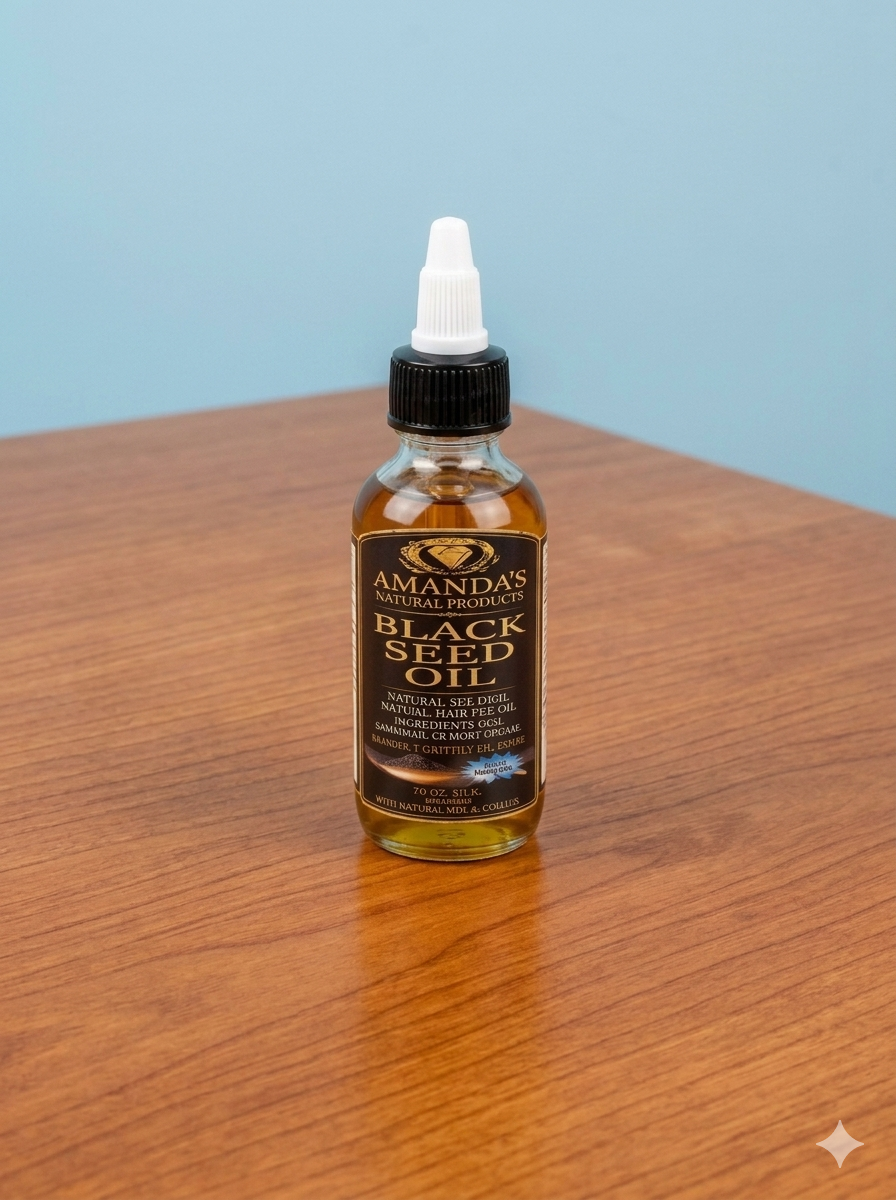
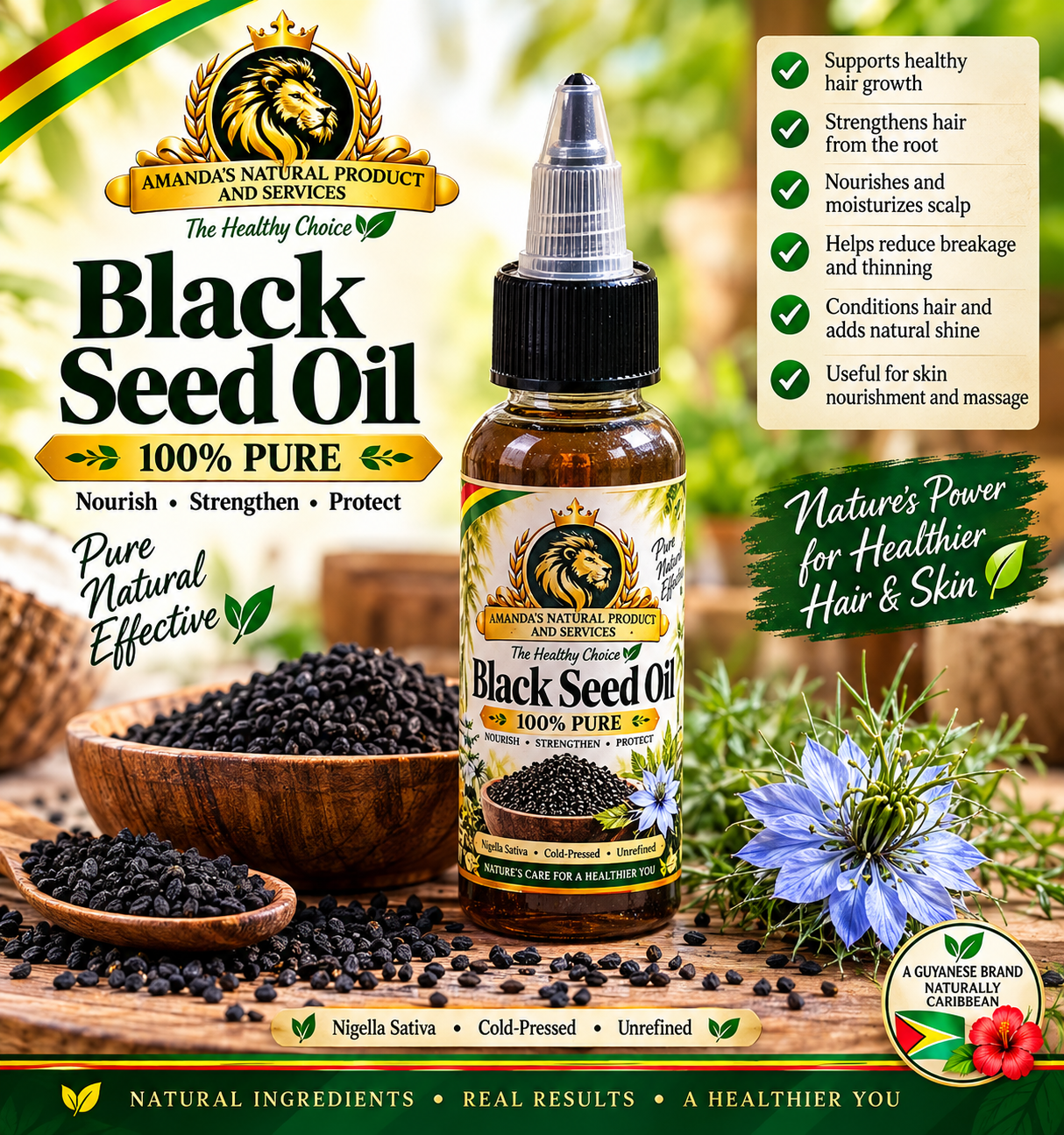
Amanda’s Black Seed Oil
Amanda’s Black Seed Oil is a versatile natural oil suitable for general personal-care use, including hair, scalp and skin care. Black seed oil is derived from the seeds of Nigella sativa and has a long history of traditional use across many cultures.
For hair and scalp care, it can be massaged directly into the scalp or incorporated into a regular oiling routine to help condition dry hair, soften the strands and support a healthy-looking shine. It can also be used alongside other natural oils as part of a personalised hair-care regimen.
For skin care, apply a small amount and massage gently into the skin. Its naturally rich oil profile makes it particularly useful when extra conditioning and moisture retention are desired.
How to use: Apply a small amount to the desired area and massage gently. For hair, use directly on the scalp, strands or ends as needed.
Amanda’s Black Seed Oil — traditional natural care with modern versatility.
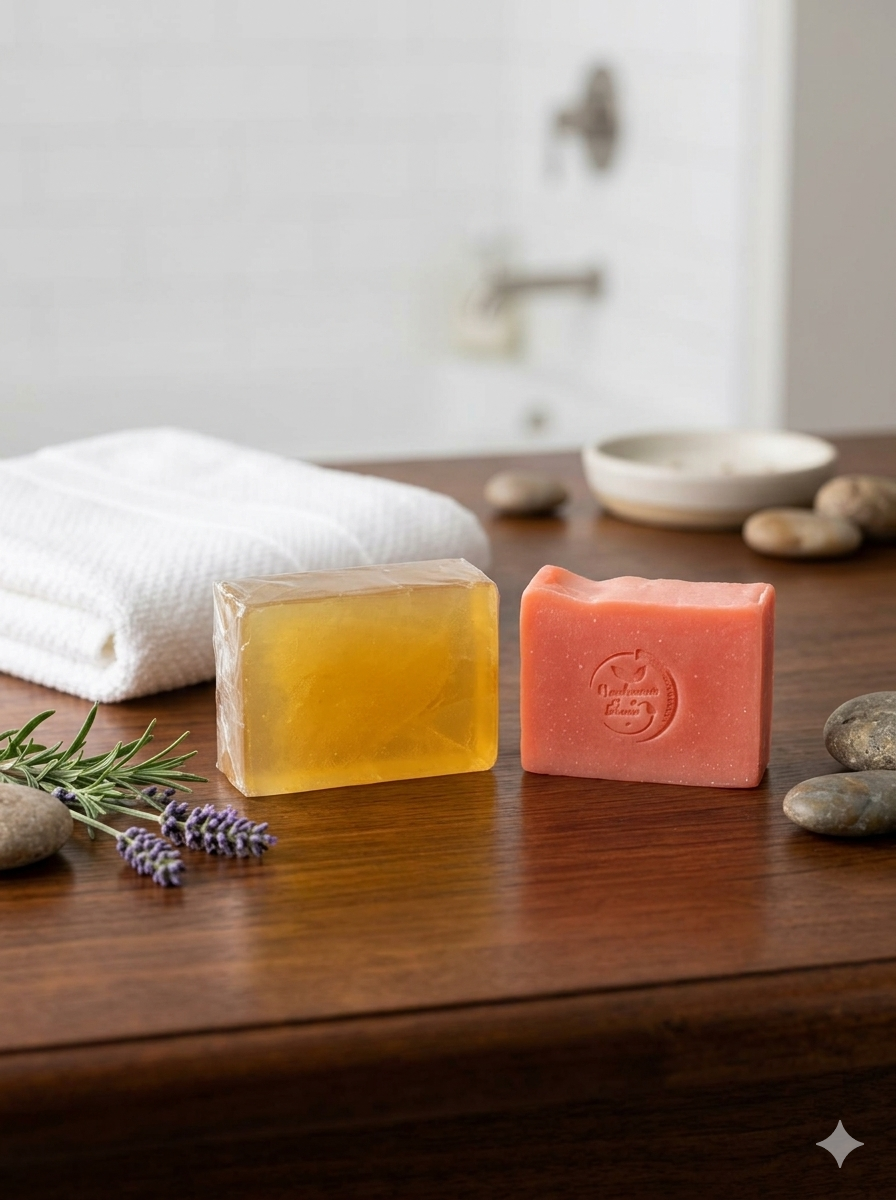
Amanda’s Natural Handmade Soaps
Cleanse • Refresh • Care Naturally
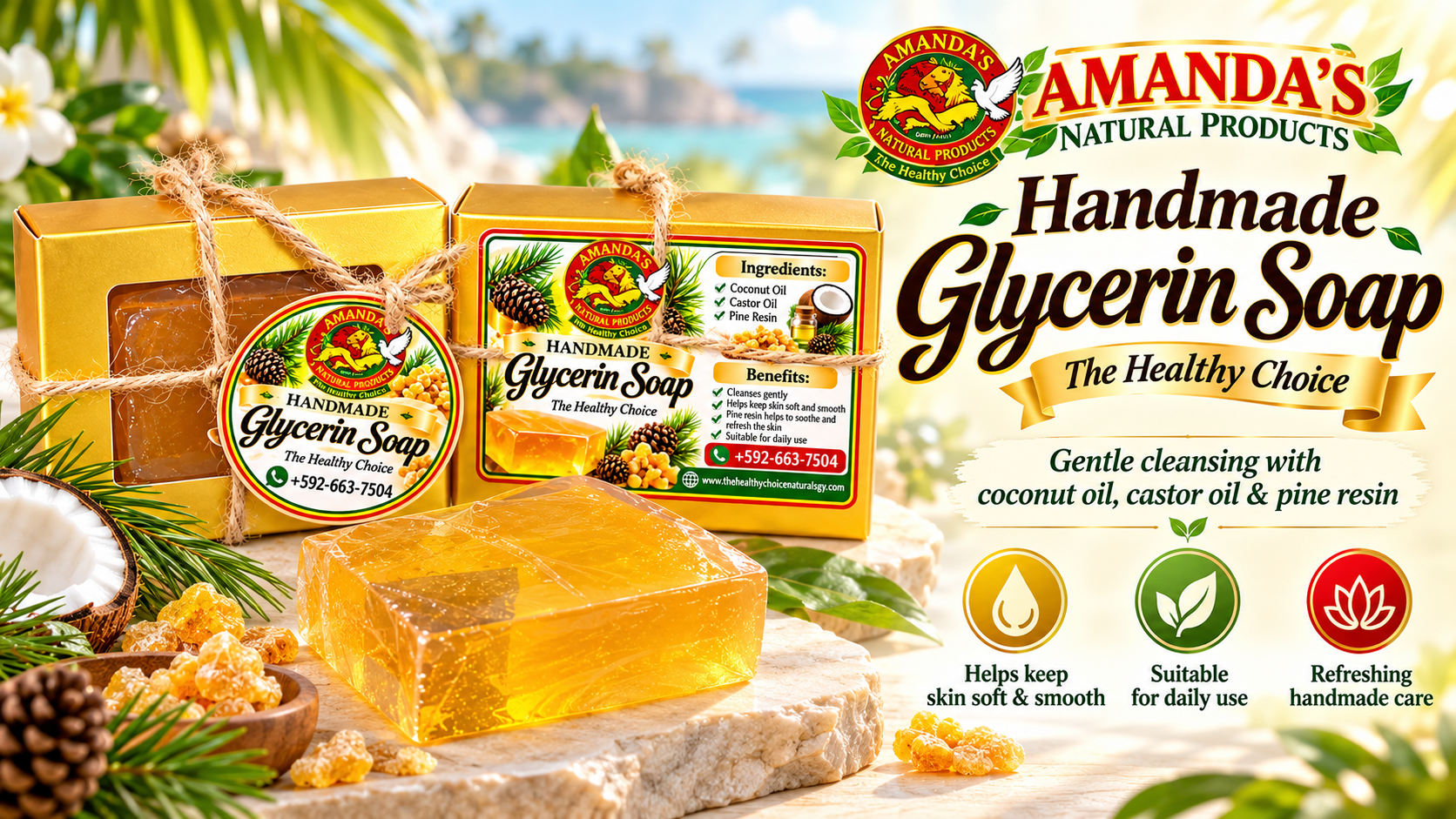
Discover the handmade soap collection from Amanda’s Natural Products, created for effective everyday cleansing while bringing the character of natural oils, botanical ingredients and carefully selected additives into your personal-care routine.
Our soap collection includes a variety of formulations, from glycerin and botanical soaps to hemp seed, black seed and charcoal varieties. Each type has its own distinctive ingredients, appearance and cleansing experience, giving customers the freedom to choose a soap that best suits their personal preference and skin-care routine.
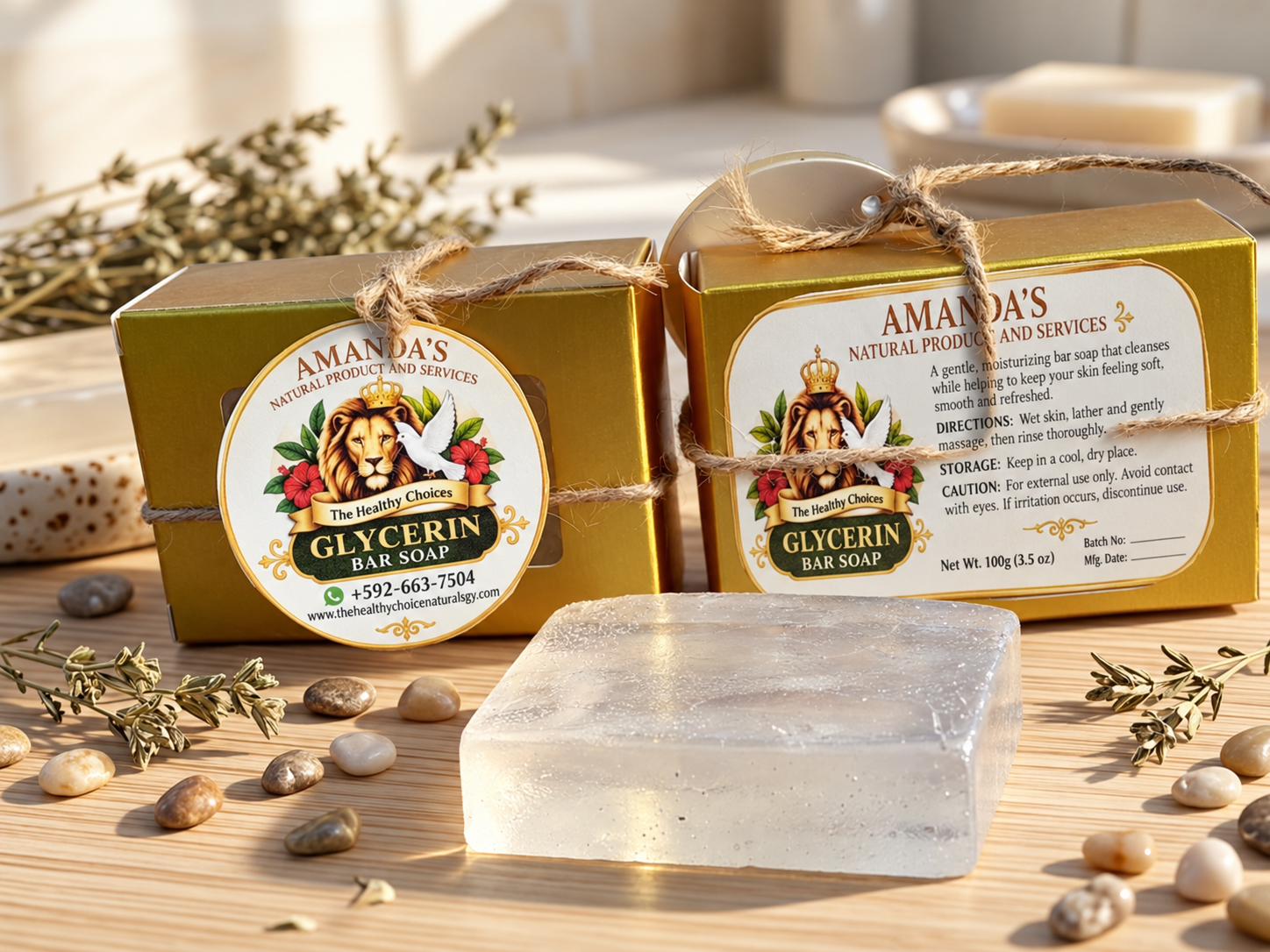
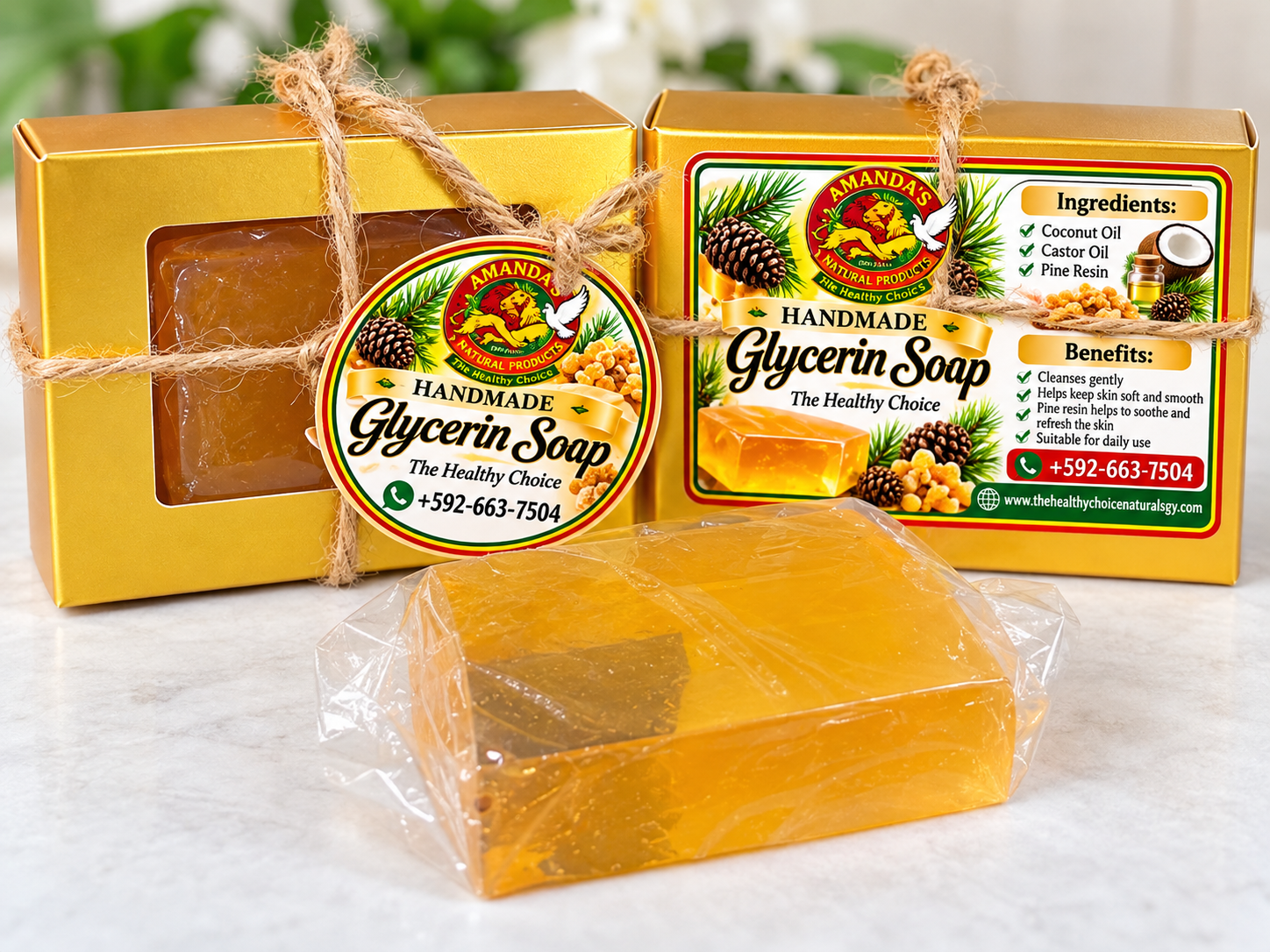
Glycerin Soaps
Glycerin is valued in personal care as a humectant, helping attract and retain moisture. Our glycerin-based varieties combine cleansing with the smooth feel and attractive appearance associated with handcrafted glycerin soaps.
Hemp Seed Soaps
Our hemp seed varieties incorporate ingredients derived from hemp into a traditional cleansing product. Hemp seed oil is naturally rich in fatty acids, particularly linoleic and alpha-linolenic acids, and contributes emollient properties to cosmetic formulations.
Black Seed Soaps
Black seed (Nigella sativa) has a long history of traditional use and is increasingly incorporated into modern natural personal-care products. Our black seed soap varieties bring this distinctive botanical ingredient into a convenient everyday cleansing bar.
Black Seed & Charcoal Soaps
For customers who prefer a different cleansing experience, selected varieties combine black seed with charcoal. Charcoal gives the soap its characteristic dark appearance and makes it an interesting addition to a varied cleansing routine.
Made for Everyday Cleansing
Amanda’s Natural Handmade Soaps are designed to remove everyday dirt, oils and buildup while providing the satisfying cleansing and lather that customers expect from a good bar of soap.
Because the collection contains different formulations, individual soaps may vary in colour, fragrance, ingredients, texture and appearance. Product-specific information should be checked when choosing a particular variety.
How to Use
Wet the soap and work between the hands or onto a suitable washcloth to create a lather. Apply to the skin as desired and rinse thoroughly with clean water. Allow the soap to drain and dry between uses to help prolong the life of the bar.
Available varieties may include:
Glycerin Soap • Hemp Seed Soap • Black Seed Soap • Black Seed & Charcoal Soap • Other Botanical Varieties
Amanda’s Natural Products
The Healthy Choices
Okra Seed Oil — Hair & Skin Benefits
Hair: Helps condition and soften the hair, improves manageability, adds shine, and helps reduce moisture loss. Its natural fatty-acid content makes it useful in nourishing hair and scalp formulations.
Skin: Works as an emollient, helping soften and moisturize the skin while supporting the skin's natural moisture barrier. It can leave dry skin feeling smoother and more supple.
Can be incorporated into: Hair oils, hair foods, conditioners, hair creams, scalp treatments, body oils, moisturizers, creams, lotions, balms, soaps, and other natural cosmetic formulations.
Locally produced: Amanda’s Okra Seed Oil is produced in Guyana from mature okra seeds.
Contact Amanda’s Natural Products for more information.
Professional-Grade Beauty Products Nourished by Nature, Crafted Locally
Digital Beauty Resources
Founded on Dermatological Precision
Where Nature Meets Skin Science
Our products are created with carefully selected natural ingredients chosen for the way they interact with the skin and hair. Plant oils, seeds, herbs and traditional ingredients contain naturally occurring fatty acids, antioxidants and other beneficial compounds that can help cleanse, moisturize, condition and protect the skin.
We combine traditional knowledge with a practical understanding of how ingredients behave in natural formulations, giving every ingredient a purpose rather than adding it simply because it is popular.
Natural Products That Actually Work for Caribbean People
Project Consultation Inquiry
Submit your objectives and availability to initiate a collaborative assessment and personalized recommendation plan.